
There Was Something New in the Air: Our Takeaways from MRC2026
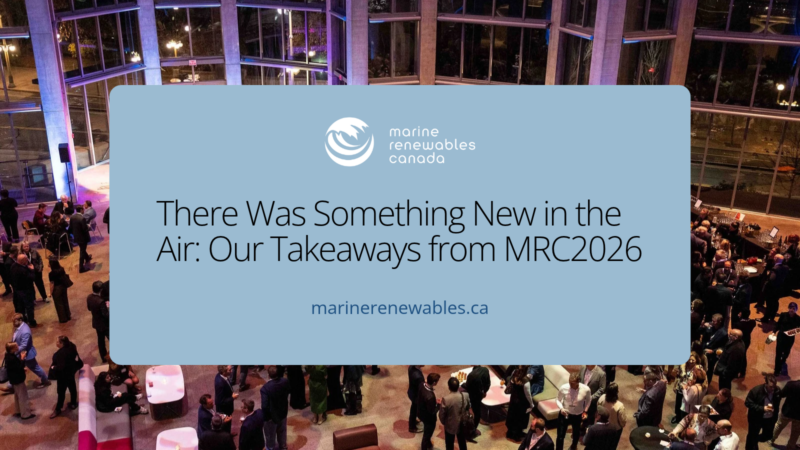
You could feel it throughout MRC2026, from the member-led workshops and industry sessions to the keynotes, receptions, and hallways of The Westin Ottawa. There was something different in the air. Anticipation. Grounded optimism. And impatience to get started.
A quick hello could turn into a conversation about what it would take to get projects built and how marine renewables could change the way Canada generates and supplies electricity. There was an ease to those conversations, even when the questions were hard. People were glad to see each other, and they came ready to get to work.
On November 17-19, the hallways of The Westin Ottawa saw more than 500 industry experts, Indigenous leaders, governments, utilities, investors, and researchers coming together to push for what comes next for our sector.
Here are our main takeaways.
1. Government is stepping up.
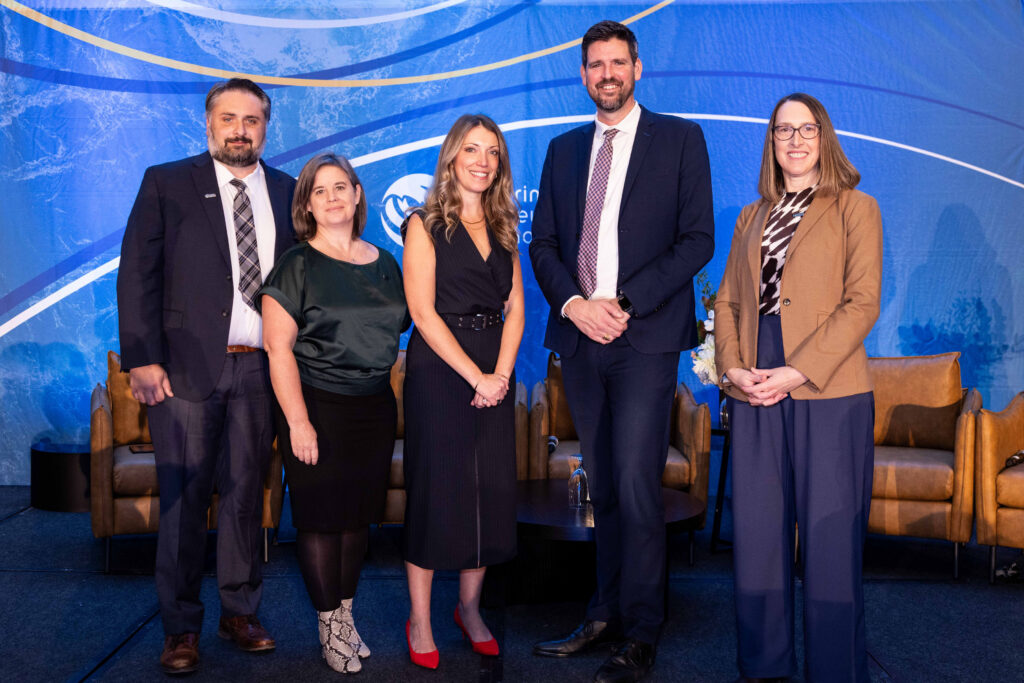
In his opening keynote, The Honourable Sean Fraser made the case for what marine renewables can deliver for Canada: clean electricity, good jobs at home, and new opportunities for Canadian businesses.
And recent federal commitments are helping with those efforts. Ottawa allocated $100 million to offshore wind research off Nova Scotia, and Budget 2026 outlined more than $50 billion in measures to expand Canada’s electricity system. The budget also proposed extending the Clean Technology and Clean Electricity investment tax credits through 2040, which would give developers more certainty as they plan offshore wind, and other marine renewable projects.
MRC2026 also coincided with a milestone for tidal energy in the Bay of Fundy. Fisheries and Oceans Canada expanded its authorization for the 15 MW Eauclaire FORCE Tidal Array from three to six turbines, and Transport Canada approved all six under the Canadian Navigable Waters Act. For project partners Eauclaire Tidal and Orbital Marine Power, those approvals bring the full array a step closer to a final investment decision.
2. Indigenous leadership is central to Canada’s clean energy future.
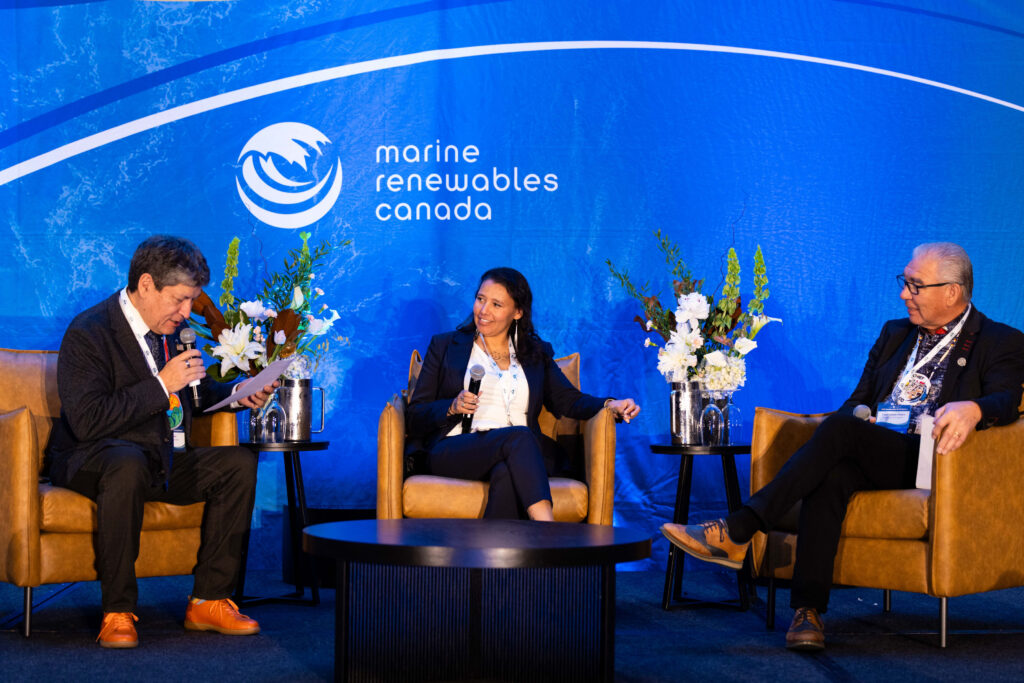
Chief Sidney Peters of Glooscap First Nation and Crystal Nicholas, President of Wskijnu’k Mtmo’taqnuow Agency, joined MRC Board Director Ken Paul for a fireside chat on Indigenous energy sovereignty. Their discussion focused on the decisions that shape projects from the outset. How can First Nations lead or co-develop projects on their own terms? What participation or ownership models can help keep economic benefits in their communities over the long term? What would workforce development look like?
The fireside chat brought together themes that surfaced throughout the conference. Meaningful consultation and Indigenous participation are fundamental to how clean energy projects move forward. But Indigenous leadership puts First Nations in a position to set priorities, shape decision, and determine whether and how they want to participate. For Nations that choose to pursue these opportunities, project ownership, business partnerships, and workforce development can help create lasting economic benefits on their own terms.
3. Potential is not progress.
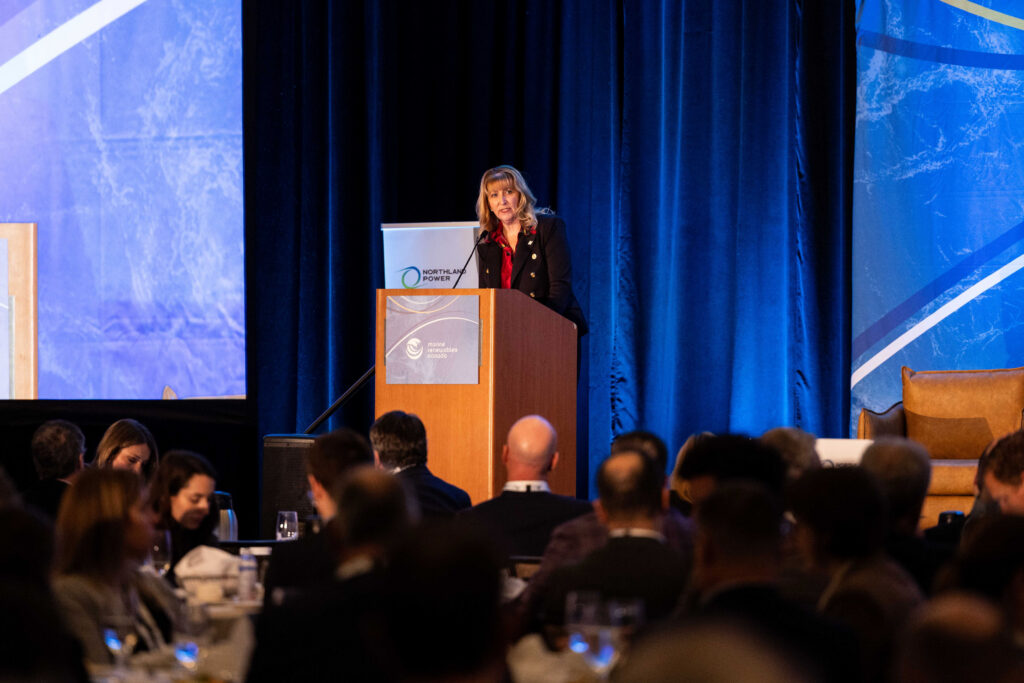
“Potential is not progress,” Northland Power President and CEO Christine Healy told delegates at the luncheon keynote. Her challenge was to make decisions with enough information to move forward, even as some questions remain open. Canada can build projects on a large scale, she argued, and doing so can strengthen both our economy and our energy security.
The conference’s discussions on creating an investable offshore wind market put some detail behind that challenge. Who will buy the electricity, on what terms, and how will it reach them? Which risks can developers carry, and which can utilities or governments manage more effectively?
Those questions are already being explored on both sides of the border. In March, Hydro-Québec issued a request for information to assess options for sourcing electricity from offshore wind farms off Nova Scotia and transmitting it to its grid. In November, Nova Scotia and Massachusetts launched a separate joint request for information on how that power could reach New England. Together, these efforts can give developers and investors a clearer picture of where the electricity could go and what it would take to get it there.
And long-term power purchase agreements and partnerships that allocate risk to the parties best placed to manage it could help bring private capital into Canadian projects.
4. Think globally, act locally.
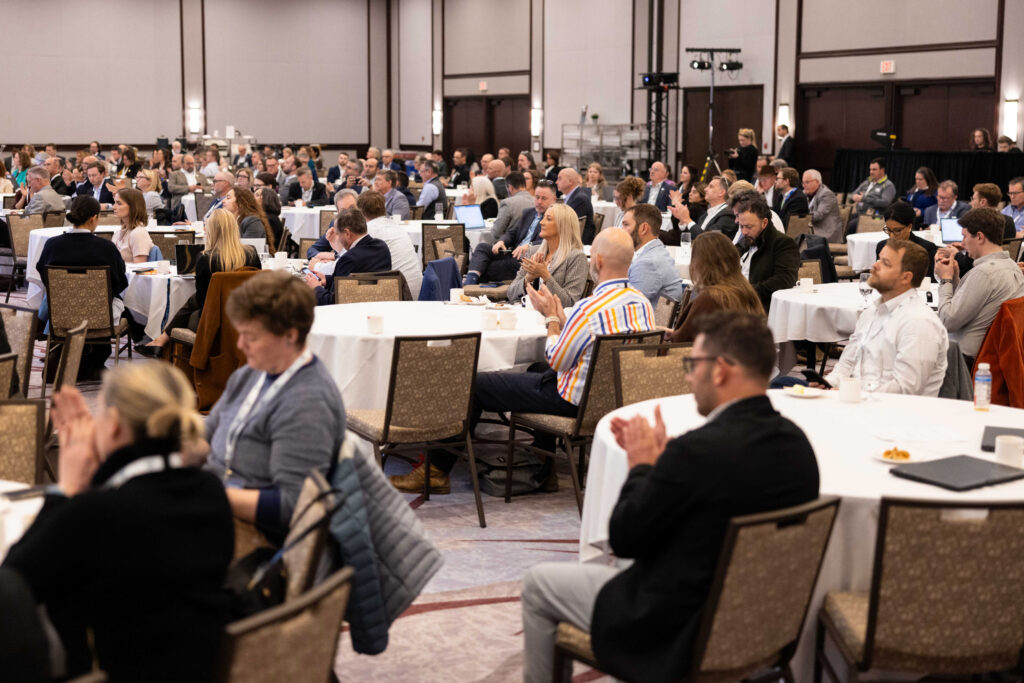
MRC2026 welcomed delegations from 12 countries that brought experience from markets that have spent decades developing offshore wind, tidal energy, and other marine renewables. Atlantic Canada brought decades of experience of its own from offshore construction to port operations, and environmental assessment services. The opportunity discussed was to build on those strengths while learning from markets that have already brought projects into operation.
MRC’s Atlantic Canada Wind Energy Supply Chain Assessment found that about 28% of the Atlantic Canadian firms assessed already had capabilities highly relevant to offshore wind. That share rose to more than 60% when firms with partially transferable experience were included. Some of those opportunities are already taking shape. Ports across Atlantic Canada have already helped receive and stage components for U.S. offshore wind projects, giving them experience they can bring to future projects in Canada.
At MRC2026, speakers in the Industry and Research & Technical tracks honed in on what worked, where they lost time and what they’d do differently. We hope those conversations helped Canadian businesses preparing to supply projects here at home see where their experience fits, what capabilities to build next and where an experienced partner can help.
As for Marine Renewables Canada, we are undertaking a two-year project, Offshore Wind Futures, to help businesses identify where their skills fit, connect with developers, and prepare to compete for contracts. The initiative also brings industry and training providers together to prepare workers for the jobs future projects will need. Learn more about Offshore Wind Futures here.
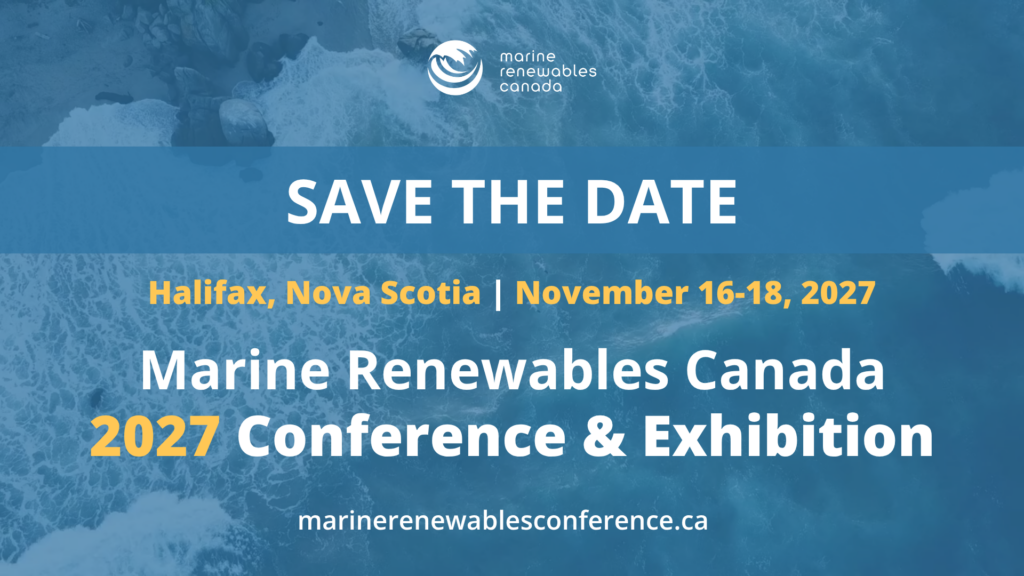
See you at MRC2027 in Halifax!
As MRC CEO Elisa Obermann put it in her closing remarks, “This moment in Canada is not like anything we’ve seen before. It’s truly our time.”
We’ll see what that moment means in the decisions made between now and MRC2027. With offshore wind and tidal energy both approaching important milestones, next year’s event could be one of our most consequential conferences yet.
Thank you to everyone who joined us in Ottawa and to the speakers, exhibitors, partners and sponsors who made MRC2026 possible.
Save the date for MRC2027 in Halifax, November 16-18, 2027!
More Information
- MRC2026 News Release: Marine Renewables Canada 2026 Conference Brings 500+ to Ottawa as Industry Looks to Advance Clean Electricity Projects
- Want to be the first to learn about sponsorship and exhibition opportunities at MRC2027? Connect with Amanda White, Senior Director, Operations and Member Services, at amanda@marinerenewables.ca.