
Clear, blue skies could be in the forecast for Canada
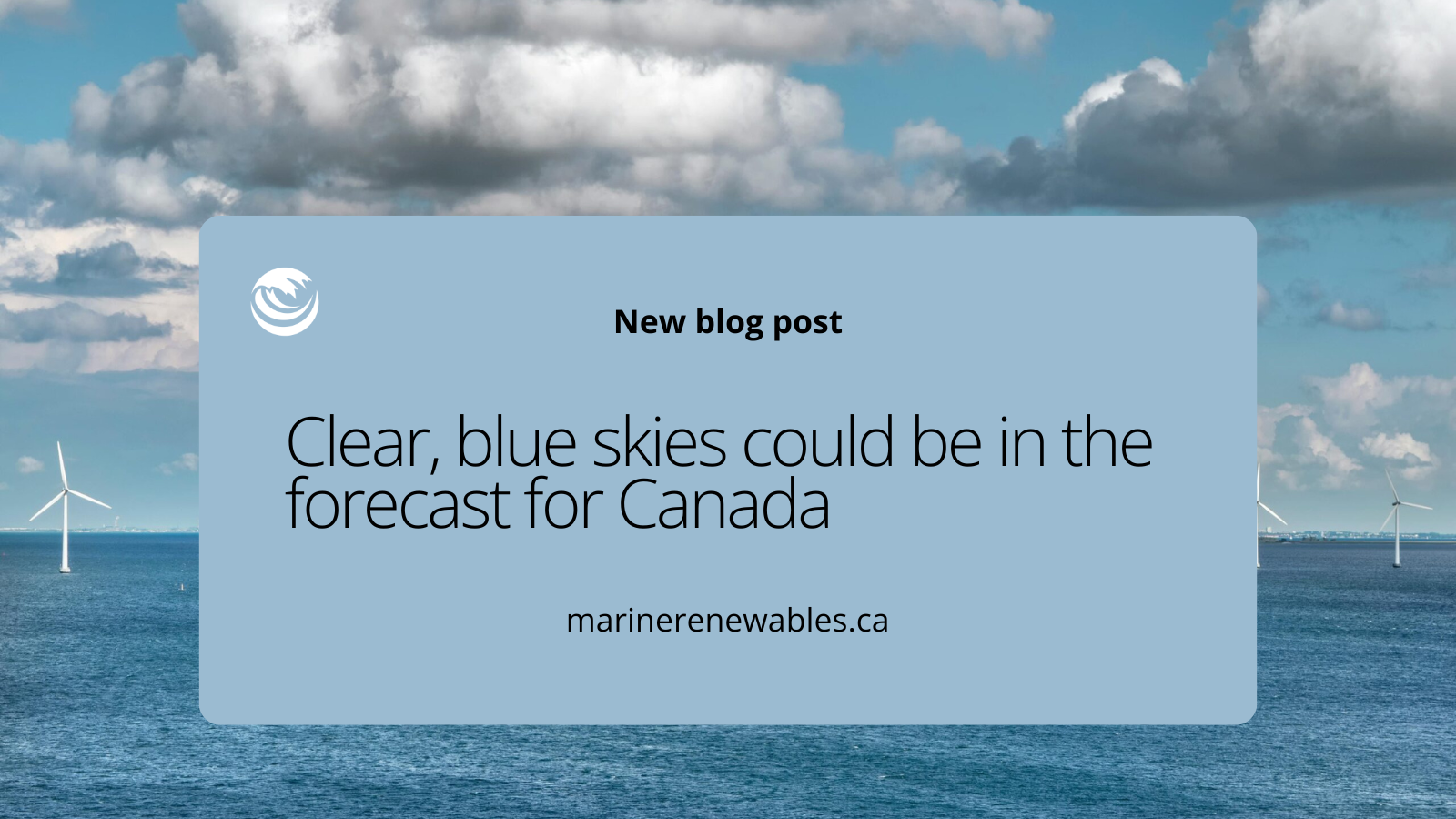
In an unfortunate turn of events, as Canadians, we’ve become used to seeing smoke-filled skies.
Every summer seems to bring another record-breaking heat wave, another wildfire season, and another reminder that climate change is no longer something we’re preparing for – it’s something we’re living through.
There are, however, proven ways to both mitigate and adapt to climate change. Renewable energy is one of them. And offshore wind, in particular, has decades of experience around the world proving it can deliver emissions-free electricity.
At the same time, as temperatures become more extreme, our demand for electricity continues to grow. We need more power to cool our homes in the summer, heat them in the winter, and support an increasingly electrified economy. That electricity supply must be reliable.
The good news is that Canada is home to some of the strongest offshore winds in the world. That’s an incredible advantage when you consider the size and diversity of our planet.
The even better news is that, thanks to that wind resource, clear, blue skies could finally be in the forecast for Canada.
Nova Scotia is leading the way
Today, more than 40 countries are generating over 80 GW of electricity from offshore wind – enough to power somewhere between 65 and 80 million homes. Around the world, offshore wind has become a proven technology that delivers reliable electricity, attracts billions in investment, creates high-quality jobs, and strengthens energy security.
It’s also one of the world’s most powerful climate solutions. According to the Ocean Renewable Energy Action Coalition (OREAC), deploying at least 2,000 GW of offshore wind by 2050 could help keep the world on a pathway toward limiting global warming to 1.5°C while supporting net-zero emissions by mid-century. North America will need to contribute approximately 360 GW toward that goal.
And here’s the remarkable part: Nova Scotia alone has an estimated offshore wind potential of up to 938 GW – more than double North America’s projected contribution and far more electricity than Canada currently needs.
The small but mighty Canadian province is answering the call. Through the Wind West Atlantic Energy initiative, it has committed to licensing 5 GW of offshore wind by 2030, laying the foundation for Canada’s first commercial offshore wind industry, while working toward more than 60 GW by 2050. At full build-out, that would be enough to supply approximately 27% of Canada’s electricity demand.
Even more encouraging, the province recently completed the prequalification process for its first offshore wind Call for Bids. Experienced developers from around the world have now demonstrated they have the technical expertise, financial capacity, and experience needed to compete for projects in Nova Scotia.
That may sound like another regulatory milestone – but it’s much more than that.
It signals to investors that Canada is serious. It gives supply chain companies the confidence to prepare and invest. It moves Canada one step closer to building its first commercial offshore wind projects. And, perhaps most importantly, it shows Canadians that we are ready to embrace practical, long-term climate solutions.
And while Nova Scotia is leading the way, its story is only the beginning.
British Columbia and the Great Lakes could be a part of our success story
We sometimes forget just how remarkable Canada’s geography really is.
We’re the second-largest country in the world, stretching nearly 10 million square kilometers across six time zones and bordered by three oceans. We’re home to iconic landscapes, such as the Pacific coastline of British Columbia, the Bay of Fundy, and the Great Lakes, to name just a few.
What we don’t often talk about is that these same landscapes hold one of Canada’s greatest clean energy opportunities.
Off the coast of British Columbia, powerful and consistent winds create ideal conditions for floating offshore wind. As this technology continues to mature globally, Canada has an opportunity to adopt it and become a leader. Floating offshore wind could help power coastal communities and industry, strengthen energy security, create new opportunities for Indigenous partnerships, and establish entirely new supply chains on Canada’s West Coast.
Then there are the Great Lakes, which have the potential to support approximately 160 GW of fixed-bottom offshore wind, with another 415 GW of floating offshore wind potential in deeper waters.
Think about that for a moment. A single offshore wind turbine can generate between 8 and 15 MW and power up to 15,000 homes. Imagine what a fleet of turbines could mean for Ontario’s clean electricity future – all while creating remarkable economic opportunities.
Exploring offshore wind in British Columbia and the Great Lakes can unlock reliable, emissions-free electricity for generations while strengthening our electricity system, attracting investment, creating thousands of skilled jobs, and supporting Canadian manufacturing.
How do we get there?
The climate crisis is affecting every living thing on our planet – from land to sea. The more we understand and support clean energy solutions that work with nature, the stronger, cleaner, and more sustainable our future can be.
At Marine Renewables Canada, we developed our Sector Vision 2050 to highlight Canada’s immense offshore wind opportunity and provide practical recommendations to help accelerate its responsible development.
We invite you to explore the Sector Vision, as well as follow us on LinkedIn and subscribe to our updates for more insights.