
Wave Energy
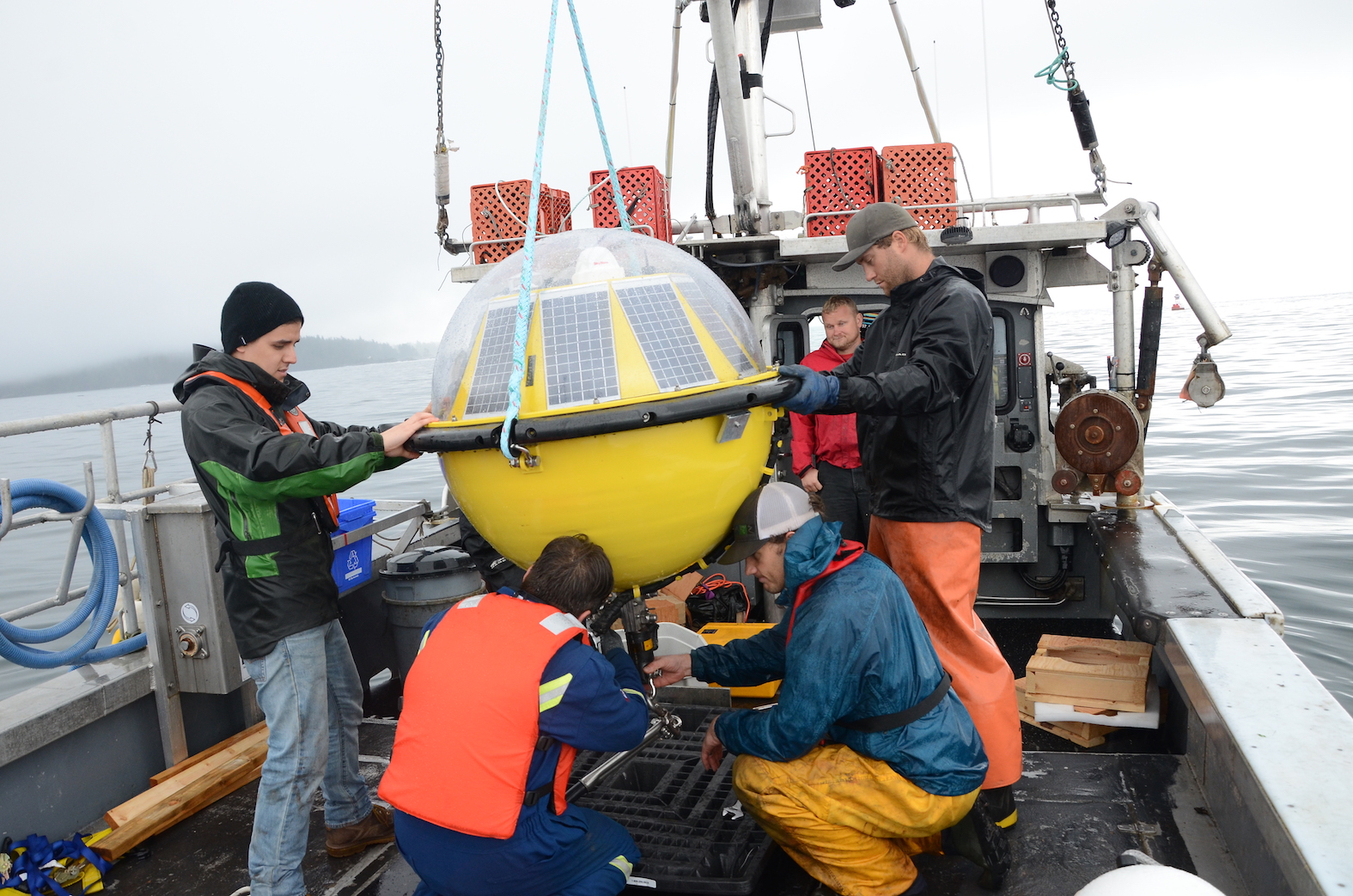
Image: Wave Energy Research, British Columbia
What is Wave Energy?
Wave energy generates electricity by capturing the movement of ocean waves, which form as wind blows across the water’s surface. Wave energy devices can produce power from the up-and-down motion of waves at the surface or from pressure changes below the water. Waves hold enormous energy potential, and in many regions, consistent winds create steady wave conditions that can provide nearly continuous electricity.
While wave energy output can vary, it can be forecast in advance, making it a reliable and predictable energy source. A wave’s energy depends on factors such as its height, length, speed, and the density and movement of the water. As with tidal energy, faster-moving water contains more energy and can generate more power.
Wave energy also offers a seasonal advantage. Wave conditions are often strongest during winter months, when electricity demand in Canada is highest. By harnessing this powerful and predictable resource, wave energy can help reduce reliance on fossil fuels, lower carbon emissions, and support a cleaner, more resilient energy system.
Wave Energy Technologies
Wave energy devices can be installed near shore or farther offshore, depending on local conditions and project goals. In practice, nearshore locations are often the most cost-effective, as they reduce the cost of connecting to the grid or delivering power directly to remote coastal communities.
A range of wave energy technologies is being developed, each suited to different wave conditions and locations:
Point absorbers
Floating devices that capture energy from the up-and-down motion of waves at a single point. Inside the device, this motion drives pistons, gears, or hydraulic pumps that convert wave energy into electricity.
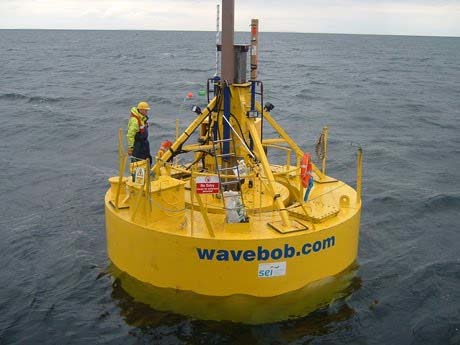
Point absorber – Wave Bob
Attenuators
Long, multi-segmented floating devices aligned parallel to the direction of incoming waves. As waves pass along the device, its segments flex at different heights, driving hydraulic systems or other converters to generate power.
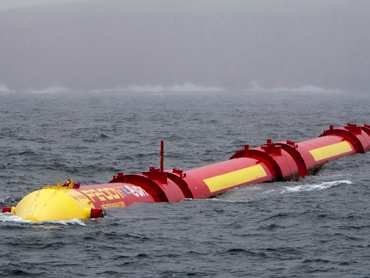
Attenuator – Pelamis Wave Power
Terminators
Devices positioned perpendicular to incoming waves to capture or reflect wave energy. Terminators are typically onshore or nearshore, though floating versions also exist.
Oscillating Water Columns
Waves force water into a chamber through an opening below the surface, compressing air trapped above. As the water level rises and falls, air is pushed through a turbine, generating electricity.
Overtopping devices
These systems capture incoming waves in an elevated reservoir. As the stored water is released, it flows through turbines to generate power.
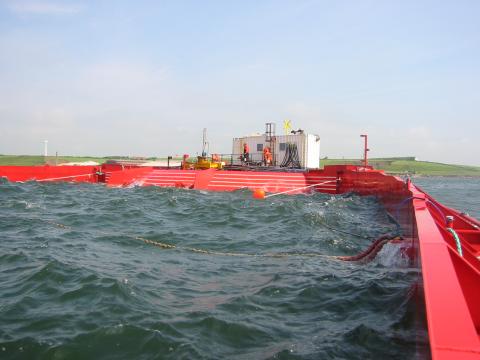
Overtopping (terminator) – Wave Dragon
Wave Energy in Canada
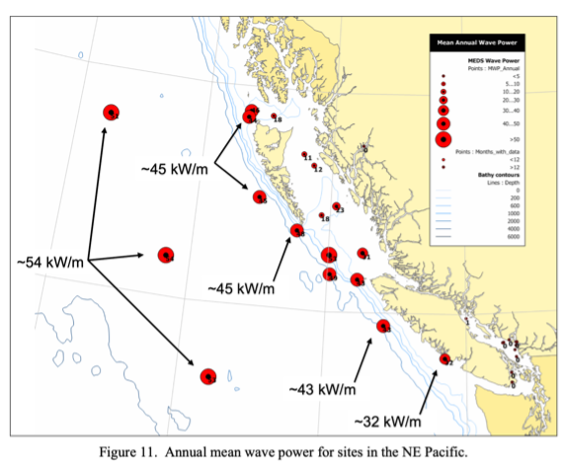
Canada has strong wave energy resources along both its Atlantic and Pacific coasts, with an estimated extractable potential of between 10,100 and 16,100 MW. Powerful, consistent waves driven by offshore winds offer a significant opportunity to supply clean electricity to coastal and remote communities – many of which currently rely on diesel generation. Because wave energy is strongest in winter, when electricity demand is highest, it could play an important role in Canada’s future energy mix.
 |
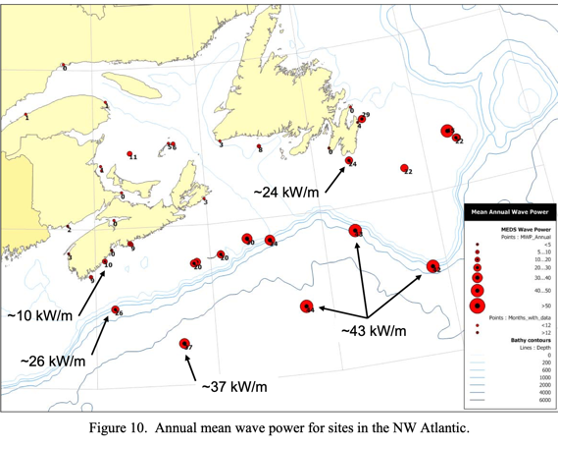 |
Images: Wave energy sites across Canada with highest energy potential. Source: Cornett, Andrew. Canadian Hydraulics Centre. Inventory of Canada’s Marine Renewable Energy Resources, 2006. https://www.nrcan.gc.ca/sites/www.nrcan.gc.ca/files/canmetenergy/files/pubs/CHC-TR-041.pdf
Research and development are central to Canada’s progress in wave energy. The University of Victoria led the West Coast Wave Initiative (WCWI), bringing together academic, government, and industry partners to assess wave resources along the west coast of Vancouver Island. This work included wave measurement, system modelling, and renewable energy integration.
More recently, wave energy feasibility is being explored within the traditional territory of the Mowachaht/Muchalaht First Nation on the west coast of Vancouver Island. Through the Pacific Regional Institute for Marine Energy Discovery (PRIMED), researchers have identified significant wave energy potential that could support community-scale power systems. PRIMED continues to play a key role in advancing small-scale wave and tidal solutions that reduce diesel use, build local expertise, and strengthen Canadian innovation.
Wave Energy Globally
Internationally, several wave energy test sites and deployments are helping prove the potential of ocean waves as a clean power source.
At the European Marine Energy Centre in Scotland, a range of wave energy converters have been tested in open sea conditions, building valuable data for commercialization. Wave test facilities like BiMEP in Spain and the Lysekil wave test site in Sweden have hosted long-term trials of different devices, advancing reliability and design.
The Mutriku Breakwater Wave Plant in Spain has been producing continuous clean electricity since 2011, demonstrating how wave energy can operate reliably in real-world conditions.
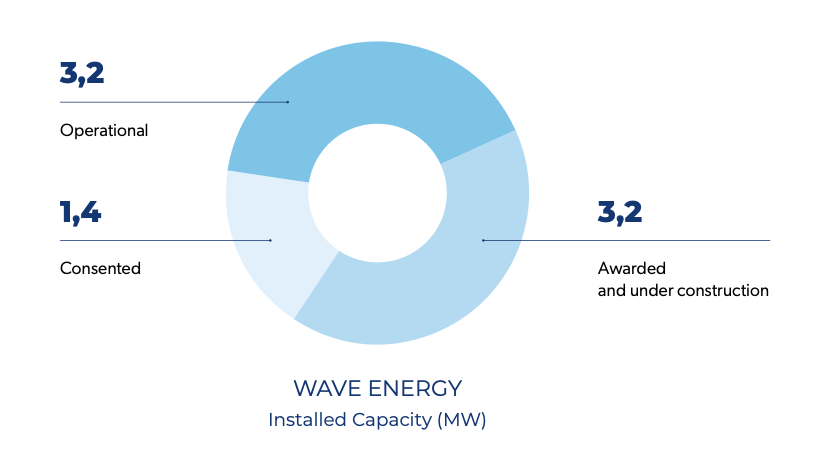
Source: Ocean Energy Systems Annual Report 2024. https://www.ocean-energy-systems.org/documents/49014-oes-annual-report-2024.pdf/
With extensive coastlines and a strong research base, Canada is well positioned to grow its wave energy sector. By advancing wave energy at home, Canadian researchers and companies can also export expertise internationally – supporting economic growth while contributing to a cleaner global energy future.
Lean More
West Coast Wave Initiative (WCWI)
Pacific Regional Institute of Marine Energy Discovery (PRIMED)
Natural Resources Canada: What is marine renewable energy?
International Energy Agency – Ocean Energy Systems
International Renewable Energy Agency (IRENA) Wave Energy: Technology Brief