
River Current Energy
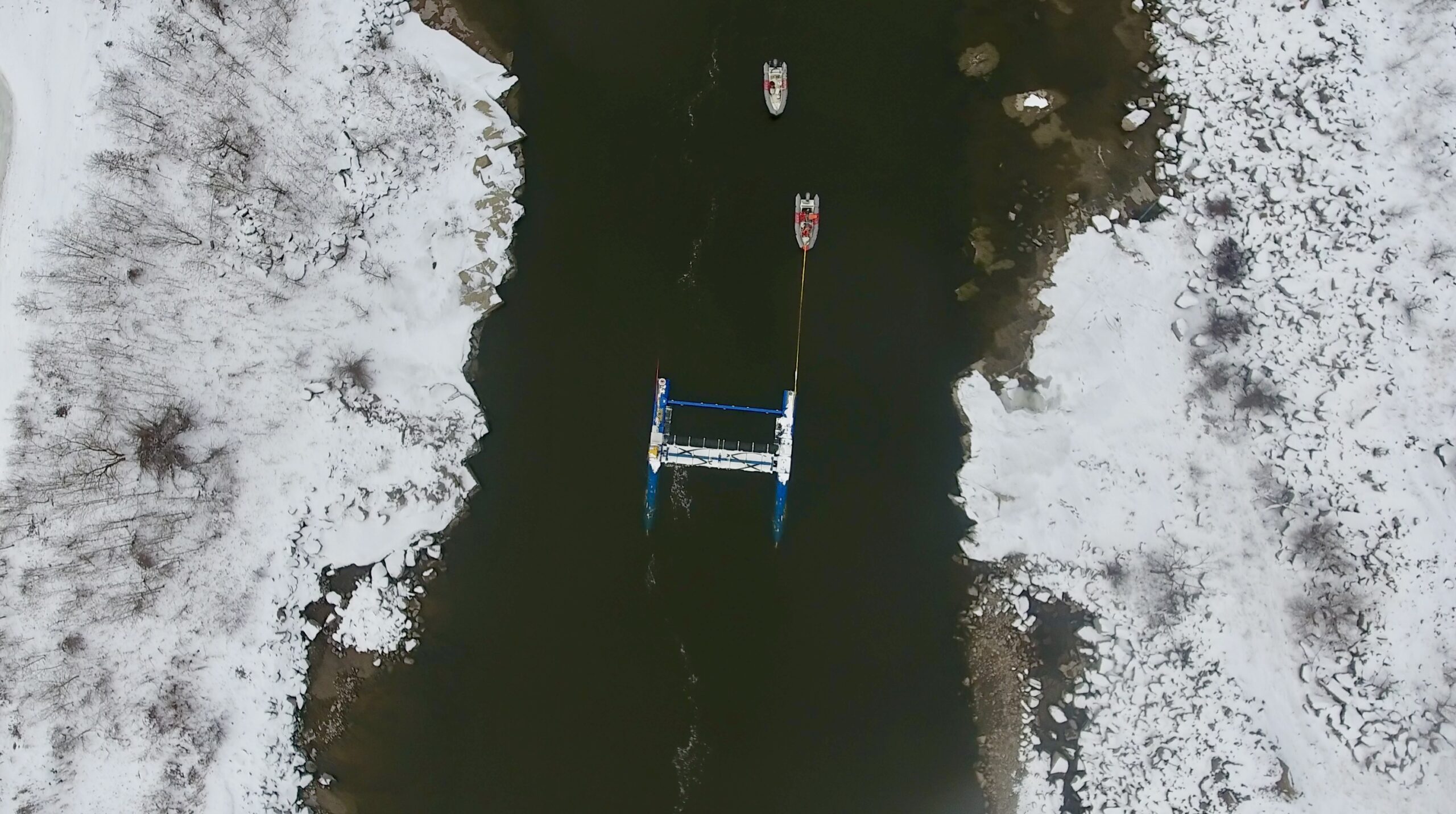
RivGen Power System, Source: ORPC
What is River Current Energy?
River current energy is a method of generating electricity by harnessing the natural flow of rivers and streams. Similar to tidal energy, the power produced depends on the volume of water and the speed of the current.
River current energy – also known as hydrokinetic energy – devices are not dams. Instead of storing water in a reservoir to create a height difference, these systems are installed directly in the river, either on the riverbed or on floating platforms. They generate electricity by capturing the kinetic energy of moving water.
Because rivers flow continuously and in one direction, river current energy provides a consistent and reliable source of power. This makes it well suited for meeting baseload demand. In addition, many communities – both urban and remote – are located near rivers. Generating electricity close to where it is needed helps reduce infrastructure costs and minimize transmission losses.
River Current Technologies
Like a small underwater wind turbine, a river current device harnesses the natural kinetic energy of flowing water. As the current passes through the turbine, it turns the blades, spinning a rotor that captures this motion and converts it into electricity.
River turbines are modular, allowing units to be added or removed easily to match energy needs. While the technology is still emerging and multiple designs are under development, these systems already demonstrate significant promise: they offer continuous power generation with relatively low capital and maintenance costs.
River current devices are best suited to waterways with steady, year-round flow and minimal exposure to extreme flooding, turbulence, or prolonged low-water conditions. Power generation is exponentially related to water speed – when water velocity doubles, energy output increases eightfold.
These devices can also be integrated with existing infrastructure, such as bridges and engineered waterways, including irrigation canals and aqueducts, resulting in substantial cost savings. Many canals are concrete-lined, which increases water velocity and enhances energy potential.
River current energy offers several key advantages:
- The ability to generate power from relatively small water resources
- Continuous, reliable electricity production
- Extremely high capacity factors (up to 65–95%), leading to lower energy costs
- A significantly smaller environmental footprint than conventional hydropower
- Seasonal alignment with demand, as both river flows and electricity needs peak in winter
River Current Energy in Canada
 Image: Field, BC, Canada
Canada is a powerhouse in river current energy potential, with an estimated 340 GW of opportunity (NRCan, 2014). The largest opportunities are found in British Columbia, Quebec, and the Northwest Territories, with more research underway to identify the best places for future projects.
Canada is home to several innovative companies and research facilities leading the way in river current energy. A key hub is the Canadian Hydrokinetic Turbine Test Centre (CHTTC) in Manitoba, which has hosted more than 15 turbine deployments since 2013. Additionally, companies are testing and demonstrating new devices in rivers, canals, and tidal channels across the country. Their work is helping prove that hydrokinetic systems can deliver clean, reliable power while building Canadian expertise in this growing sector.
River current technology could serve a key role for remote and Indigenous communities that still depend on expensive and polluting diesel generators. These systems are durable, relatively low cost, and can often be manufactured, installed, and maintained locally. This creates opportunities for community-led projects, long-term job creation, and greater energy independence.
River Current Energy Globally
River current energy development is led by Canada and the United States, which have established research programs, testing facilities, and pilot deployments, particularly for remote and distributed power applications. In Europe, countries including France, the United Kingdom, Norway, and Germany are advancing the technology through research initiatives and small-scale projects.
In the United States, river current energy research is moving forward with real-world demonstrations that show how flowing water can generate clean electricity. In Millinocket, Maine, Ocean Renewable Power Company (ORPC) deployed its RivGen hydrokinetic power system, testing multiple devices in the Millinocket Stream to refine performance and explore how river currents can power infrastructure like electric vehicle charging stations. In Alaska, ORPC’s RivGen Power System has been installed in the Kvichak River at Igiugig Village, where a submerged turbine has supplied renewable electricity to the local microgrid and reduced dependence on diesel fuel.
Learn More
Canadian Hydrokinetic Turbine Test Centre (CHTTC)