
- This event has passed.
Data for Decision Making Webinar Series | The Living Laboratory: Sable Island Science and Offshore Wind
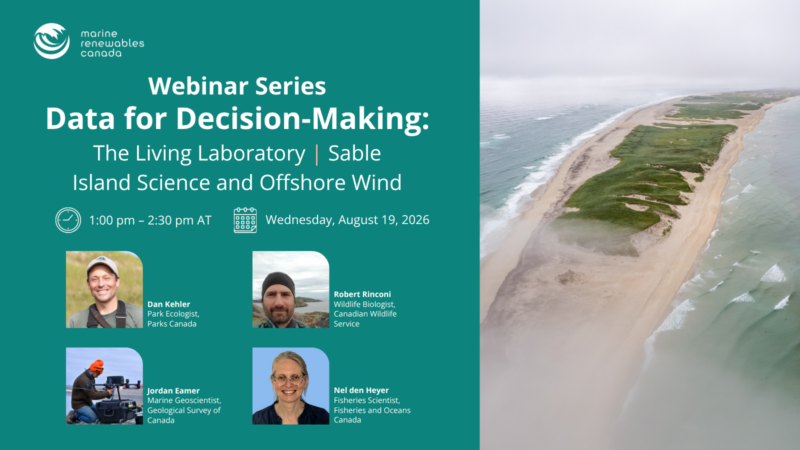
Sable Island is unlike anywhere else in Canada. This remote sandbar in the middle of the Northwest Atlantic has been home to continuous scientific observation for generations, building one of the most valuable long-term environmental records in the country. Join us for this special edition of MRC’s Data for Decision Making series as we explore what that legacy means for offshore wind development in Atlantic Canada.
We’ll be joined by four expert panelists from Parks Canada, the Geological Survey of Canada, Fisheries and Oceans Canada, and Environment and Climate Change Canada, each offering a distinct perspective on the island’s research ecosystem. The session will trace Sable Island’s history as a long-term environmental monitoring program and cover active research across three key areas: geological surveys, seal ecology and seabird ecology. Panelists will also speak to the methodologies that make the island such a productive research platform, and how its geographic isolation and protected status have enabled the kind of long-term observation that few sites in the world can support.
The webinar will also address Sable Island’s extensive meteorological data record – one of the longest and most detailed in the Northwest Atlantic – and how this historical dataset can inform wind resource assessments, site characterization, and environmental baseline work for projects in the region.
We’ll close by drawing together the broader picture: what Sable Island’s research ecosystem means for the offshore wind industry, from environmental impact assessment to long-term monitoring, and how this unique platform can support responsible development in Canadian waters.
Don’t miss this opportunity to deepen your understanding of Atlantic Canada’s research ecosystem and engage directly with the scientists leading Canadian marine research!

Meet the Speakers
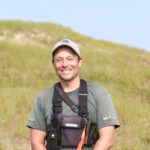 Dan Kehler – Park Ecologist, Parks Canada
Dan Kehler has worked for Parks Canada since 2005, and as Park Ecologist for Sable Island National Park Reserve since 2016. He holds M.Sc degrees in biology and statistics, and his background includes ecological monitoring and population dynamics. As park ecologist, Dan works with research partners to expand the natural science knowledge and further conservation of Sable Island. Working for Sable Island National Park Reserve is the experience of a lifetime.
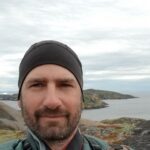 Robert Rinconi – Wildlife Biologist, Canadian Wildlife Service
Rob Ronconi lives in Halifax where he has worked for the Atlantic Region of Canadian Wildlife Service (CWS) since 2014. His career has been focused on the ecology, conservation, and management of marine birds, including a PhD at the University of Victoria studying marbled murrelets on the west coast and post-doctoral research positions at Dalhousie and Acadia Universities studying shearwaters, gulls, terns, and storm-petrels. Currently with CWS, his role as the Wildlife Emergency Response Coordinator includes planning and response to oil spills and avian influenza outbreaks. His work on Sable Island has included studies of gulls, terns, and Ipswich sparrow to assess population status, foraging ecology, migration pathways, risks to offshore oil and gas infrastructure, and recently studying the prevalence and transmission pathways of highly pathogenic avian influenza.
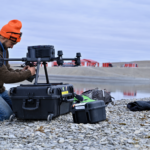 Jordan Eamer – Marine geoscientist, Geological Survey of Canada
Jordan was born and raised on Vancouver Island in British Columbia, where his research interests in coastal geomorphology and Quaternary geology developed. Jordan’s research has always been focussed on the coastal areas of BC, where he worked up and down the coast in areas such as Haida Gwaii, the Hakai Protected Area, and western Vancouver Island. His focus was sediment budgets for coastal restoration projects, climate change adaptation, coastal erosion, and late Quaternary reconstruction and paleogeography. He did a postdoc at the University of Calgary where he acted as a project manager/science advisor for Remotely Piloted Aerial System application development. He still is fortunate to continue to research on Canada’s Pacific Coast as well as extensive use of RPAS in his research.
Jordan joined the federal Public Service with Parks Canada Agency in 2017, working for the Sable Island National Park Reserve. While there, he worked in operations: landing planes, forecasting storms, and fixing buildings. Notably, he had the opportunity to spend 8-10 weeks at a time out on Sable Island, spending more than a year of his (many) days on the island. In 2019 Jordan joined the Geological Survey of Canada at the Bedford Institute of Oceanography in Dartmouth to further his career in the geosciences, where he has primarily been focussed on the geology of offshore wind energy, coastal geomorphology, and paleogeography.
 Nell den Heyer – Fisheries Scientist, Fisheries and Oceans Canada
Nell was born and raised in Antigonish, Nova Scotia and now lives in Halifax. She has a broad background in marine and freshwater ecology. She completed her MSc on CO2 and methane release from lake sediments at McGill University and then helped establish the Aquatic Resources Program at St. Francis Xavier University, where she developed an interest in applied and participatory science. She then completed her PhD at Dalhousie studying lobster movement in the Northumberland Strait and has been working at the Bedford Institute of Oceanography since completing her PhD. As the DFO science lead for Atlantic Halibut, she collaborated with industry to establish a multi-faceted research program for Atlantic halibut that has contributed to the sustainable management of one of Canada’s most valuable groundfish stocks.
Since 2016, Nell has been leading the DFO Maritimes Seals Unit, which has been studying seals on Sable Island for more than 60 years. Each winter when grey seals come to Sable to breed, a team of 10-12 DFO and academic researchers come to Sable for 4-6 weeks to complete the long-term monitoring program and additional research projects on reproductive and foraging ecology. Sable Island provides unique opportunity to study marine mammals in their natural environment and understand their role in the northwest Atlantic ecosystem.